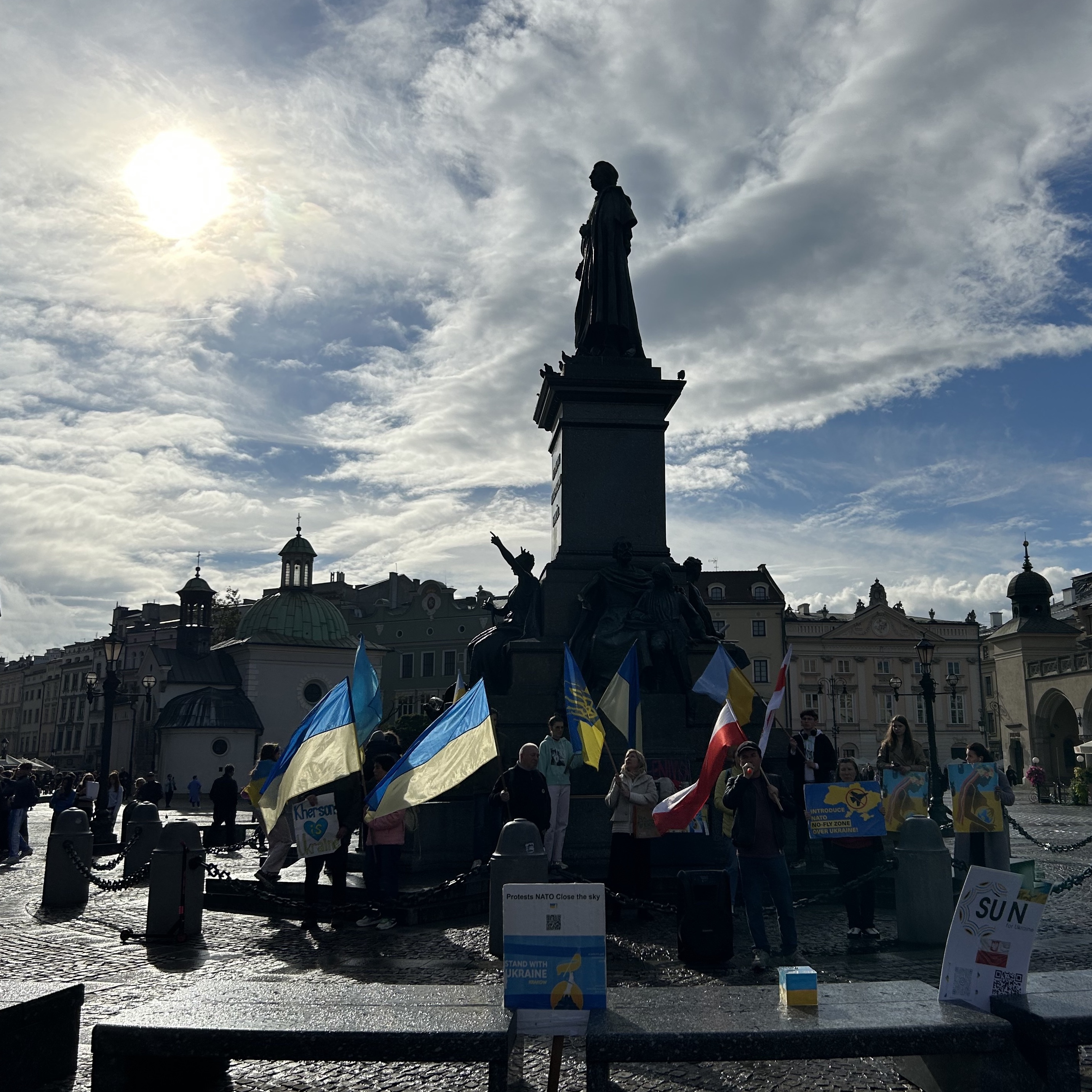
Under Mickiewicz*
They ask NATO to “close” the sky
Winter is coming
KBS, 10/25/22, Krakow
*Adam Mickiewicz (1798-1855) is considered the national poet of Poland

Under Mickiewicz*
They ask NATO to “close” the sky
Winter is coming
KBS, 10/25/22, Krakow
*Adam Mickiewicz (1798-1855) is considered the national poet of Poland

*Resource from U.S. Holocaust Museum:
NAZI POLICY FOR POLES (aka “Untermenschen” = “Subhumans”) AIDING JEWS: https://www.ushmm.org/learn/timeline-of-events/1942-1945/german-poster-announces-death-penalty-for-aiding-jews
PC: Elizabeth Mayer

Little ones read books
As Putin wages HIS war
Just beyond the San*
KBS, 10/18/22, Krakow
*This river straddles the Polish-Ukrainian Border

Wearing her slippers
She sweeps golden autumn leaves
Dluga Street is clean
KBS, 10/17/22, Krakow

My parents left Poland amid war and political oppression. I’ve always been drawn to this place—the history, the architecture, the landscape, the people—a place my Mother and Father were forced to abandon.
When I was sixteen, I emptied my bank account of all but ten dollars–so the bank would not close the account—to buy a plane ticket to Warsaw. I weighed the decision carefully as I was saving earnings from my restaurant job for future college tuition, something my parents could not afford. I took the risk and the lens through which I viewed our world changed. I met aunts, uncles and most of my nearly forty cousins. I saw people who resembled me and could pronounce my “ethnic” last name. I visited palaces, parks, and cathedrals. I undertook emotional journeys to the memorials to Poland’s WWII citizens slaughtered, imprisoned, displaced and dehumanized by Nazi and, later, Soviet occupiers. I learned Poland lost six million citizens during WWII; three million were Polish Jews and three million non-Jewish Polish citizens. My Uncle Tomek’s father died at Auschwitz. My Uncle Mietek was captured in a street snare in which Germans kidnapped citizens to ship them to Germany for forced labor. He managed to escape, walking nearly one hundred kilometers to his village. He disguised himself by carrying a crop on his shoulder, appearing as a “local” as opposed to an “escapee.” My father spent over three years in Nazi Forced Labor Camps. My mother’s earliest memories are of German bombs falling from the sky.
I returned to Poland at nineteen on a Kosciuszko Foundation Study Abroad Scholarship, spending 1984-86 at Krakow’s Jagiellonian University. Ration cards, Black Market money exchanges and the Chernobyl Nuclear Accident flavored the experience as I dug deeply into my Polish history studies. I made lifelong friends in that magical medieval city.
I began my career and married. My husband accompanied me on “every few year” trips to visit family, hike Poland’s Carpathian Mountains and, occasionally, swim in the Baltic. A three-month Family Sabbatical in 2001 allowed me to volunteer in Poland’s first domestic violence prevention shelter while my husband took a break from corporate life and our daughter attended a Krakow preschool.
And so we visited, every few years, to maintain a connection. This post-pandemic trip brings me back to Krakow to conduct research for a writing project and volunteer. I plan to support some of the many Ukrainian refugees fleeing Russia’s attack on their homeland.
I do not look at the U.S. through rose colored glasses, nor do I do the same with Poland. Each country possesses a unique and complicated history. I’ve been fortunate to witness Poland’s waning years of communism, nascent return to capitalism, and acceptance to NATO and the European Union.
I return again to check the pulse of my parents’ homeland. How are people living? What are they saying? How has the substantial influx of Ukrainian refugees impacted society? What does the specter of threatened Russian aggression mean on this former Soviet Satellite nation?
I hope you will follow the images and stories I share from “on the ground” in my beloved Krakow. I invite you to follow my humble attempt to make sense of what I see and experience. Please send questions and observations my way. Poland keeps calling me.
I invite you to follow my blog, Present Time, at https://presenttime.blog.
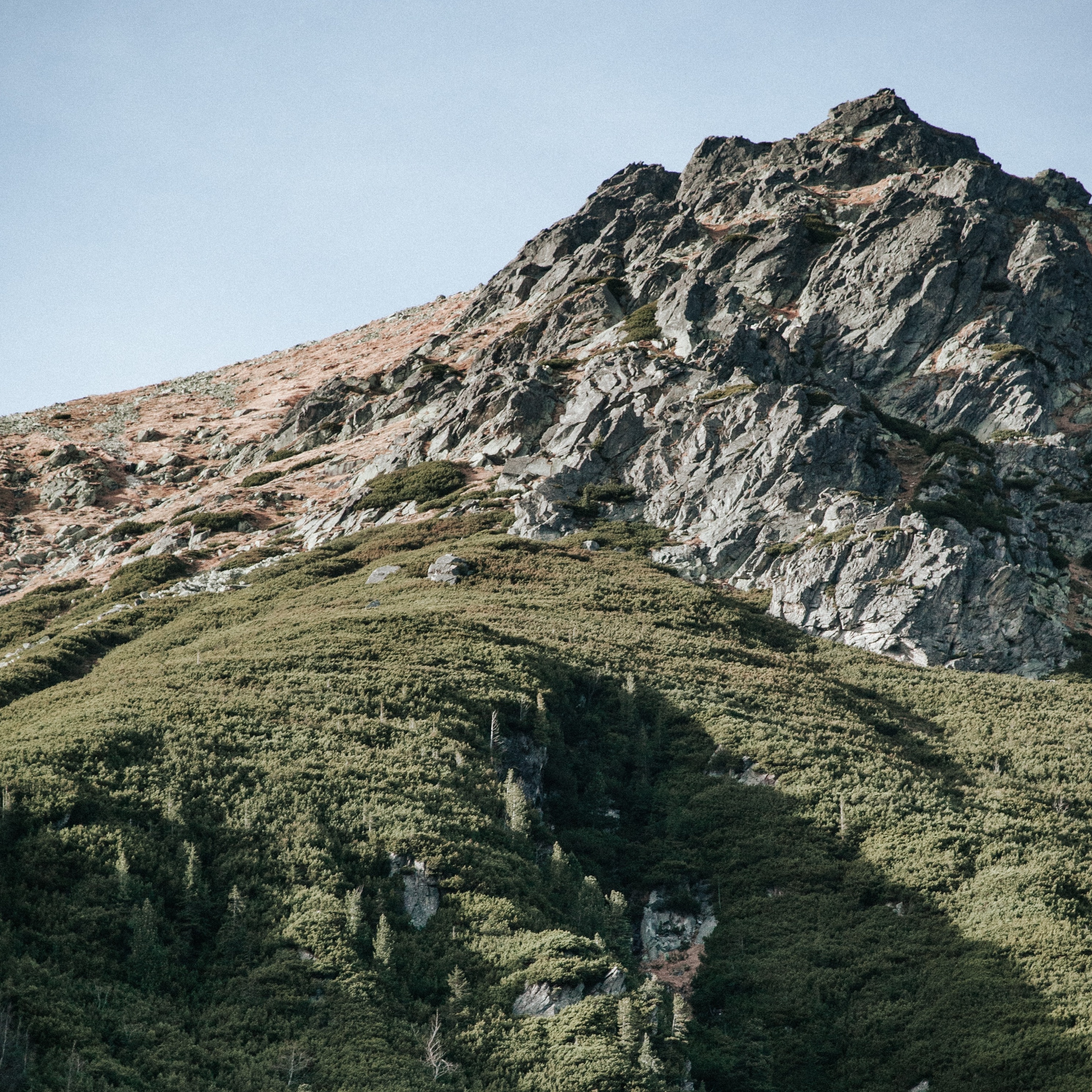
Photo Credit: Mariusz Słonski, Source: Unsplash
 Present Time