

Andrei wore a t-shirt from a swing dance event in Israel that caught Anna’s eye. She invited him to dance. This is how their story began, in Saint Petersburg, Russia. Now newlyweds, they represent “new immigrants” choosing to build lives for themselves in Poland.
Andrei is a thirty-seven-year-old entrepreneur with a passion for swing dance and martial arts. Andrei was raised in a non-observant Jewish family in Saint Petersburg. He credits his paternal grandmother, with whom he maintains a close connection, with fostering his interest in the Jewish faith. Andrei completed a degree in Jewish Studies at Saint Petersburg University. He spent the last six years living in Israel and earned citizenship. His business, in outsourcing and financial technology, employs thirty employees and is poised for expansion. Andrei supports philanthropic efforts of the Jewish Community Center of Krakow’s (https://jcckrakow.org) aid to Ukrainian refugees. Andrei dreams of, eventually, using his talents and resources to proactively foster enhanced ethical thinking and behaviors in his adopted country. Moving to Poland represents a return to his family’s historic roots in this part of the Old World.
Anna is a thirty-two-year-old ceramicist who works at Krakow’s Meditau Ceramic and Meditation Studio (https://www.facebook.com/meditau/) with a business partner from Italy. Anna studied health sciences in Moscow. Her professional journey, as a physician’s assistant, involved working in hospital emergency rooms, serving as a school nurse and, later, training as a masseuse. Anna discovered her true passion was in the creative field of ceramics. She trained and now enjoys teaching this craft to others. Her personal evolution inspired her next goal: to create a podcast about becoming a better version of oneself. Anna also hopes to have a big family and a dog, with a preference for an Australian Shepherd or a Border Collie!
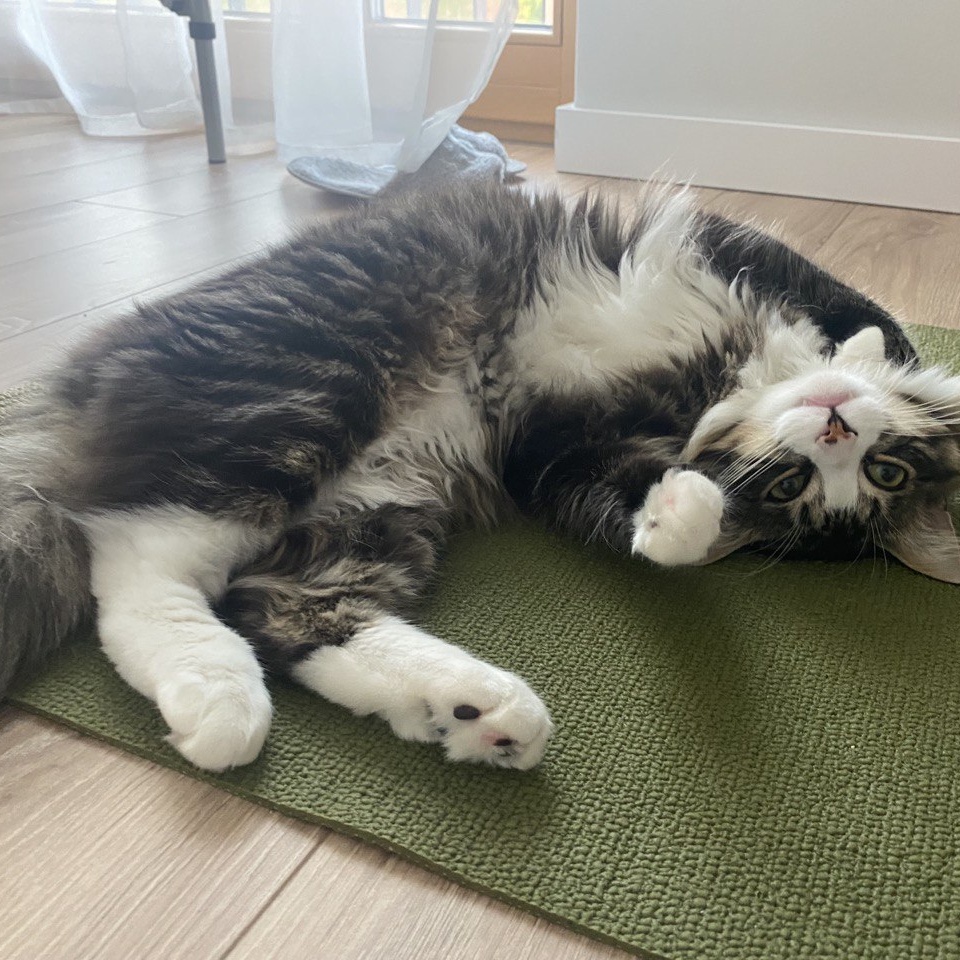
Anna and Andrei landed in Krakow following a two-month, summer 2022 odyssey driving around Europe with their cat, Wilhelm. Armed with passports, marketable skills and multiple languages, they set out to find THE COUNTRY in which to build their life together. They toured the Czech Republic, Greece, Croatia, France and Italy. Poland was not on their list.
“It was the three Euro teabag in Italy that helped us decide on Poland. I remembered from an earlier trip that Krakow was less expensive, and that the tea was good,” Andrei said with a smile. “Poland is much more affordable and offers a good quality of life. I feel people here are closer to my mentality with a strong emphasis on family and children—like in Israel. The cost of living is far lower than in Western Europe. I also appreciate Poland’s geographic diversity—there are mountains, there is the sea, there is even a desert.[1] We feel very comfortable here; we want to build a life here.”
Anna and Andrei were startled by the high costs in Western Europe and the level of homelessness they witnessed in France. Compared to France, Poland felt quite a bit safer.
“I found a good ceramics partner here in Poland,” Anna said. “This was my main reason for staying here. There are also swing dance and martial arts opportunities, plus you can get really good pickles in Poland—similar to Russia 😊!”
We talked about Russia’s invasion of Ukraine. Anna and Andrei’s families remain divided by the war, some supporting Putin, some not. Andrei and Anna emphasize that they support Ukraine and are doing what they can to support Ukrainians fleeing the war and those remaining to fight to protect their homeland from Russia’s invasion. Their experience with Poles—as folks who speak with Russian accents—has, generally, been positive. They recognize that Poles appreciate their efforts to learn and speak Polish. Although they miss family in Russia, they are unable to visit at this time. They are learning Polish and have each applied for permanent residence cards. If they were to travel to Russia today, Anna might not be allowed to leave. Andrei could leave because he carries an Israeli passport.
I asked Andrei about his experiences as a Jew in Poland and the perception of Poles by some Jews in the West.
“I feel safe and welcomed, here” Andrei said. “ I walk through Kazimierz (Krakow’s historic Jewish neighborhood) and I see signs in Hebrew. I’m involved in the Jewish Community Center. The concept of ‘Polish Hospitality’ is not exaggerated. When Poles hear me speaking Polish, they become more embracing. It’s important for Americans to remember that, beginning in the 1930s, would-be refugee Jews from Germany were rejected by England, Sweden and the United States. America is very far from this place. Americans are usually very judgmental of Poles based on newspaper articles and books that don’t show Poland from the best perspective. I think they should come here and live here and see for themselves.”
Andrei mentioned something that resonated with me. He said he wants to have the option of living in “two homes” (i.e., two different countries). Perhaps I read too many Erich Maria Remarque novels about WWII refugees. Maybe I’m indelibly marked by my parents’ refugee experiences. Maybe it was my student from the Democratic Republic Congo years ago who retold this story: “During the Civil War, I escaped with two sets of documents. One set reflected my tribe of origin. The other set reflected a warring tribe. When stopped by marauding militiamen, I had to know which dialect to speak and which documents to surface, lest I be shot on the spot.”
In an unsettled world, documents equal options. Andrei and Anna are aiming to play their cards well as they build a life for themselves in this little corner of Central Europe.
I invite you to follow my blog, Present Time, at https://presenttime.blog.
 Present Time