

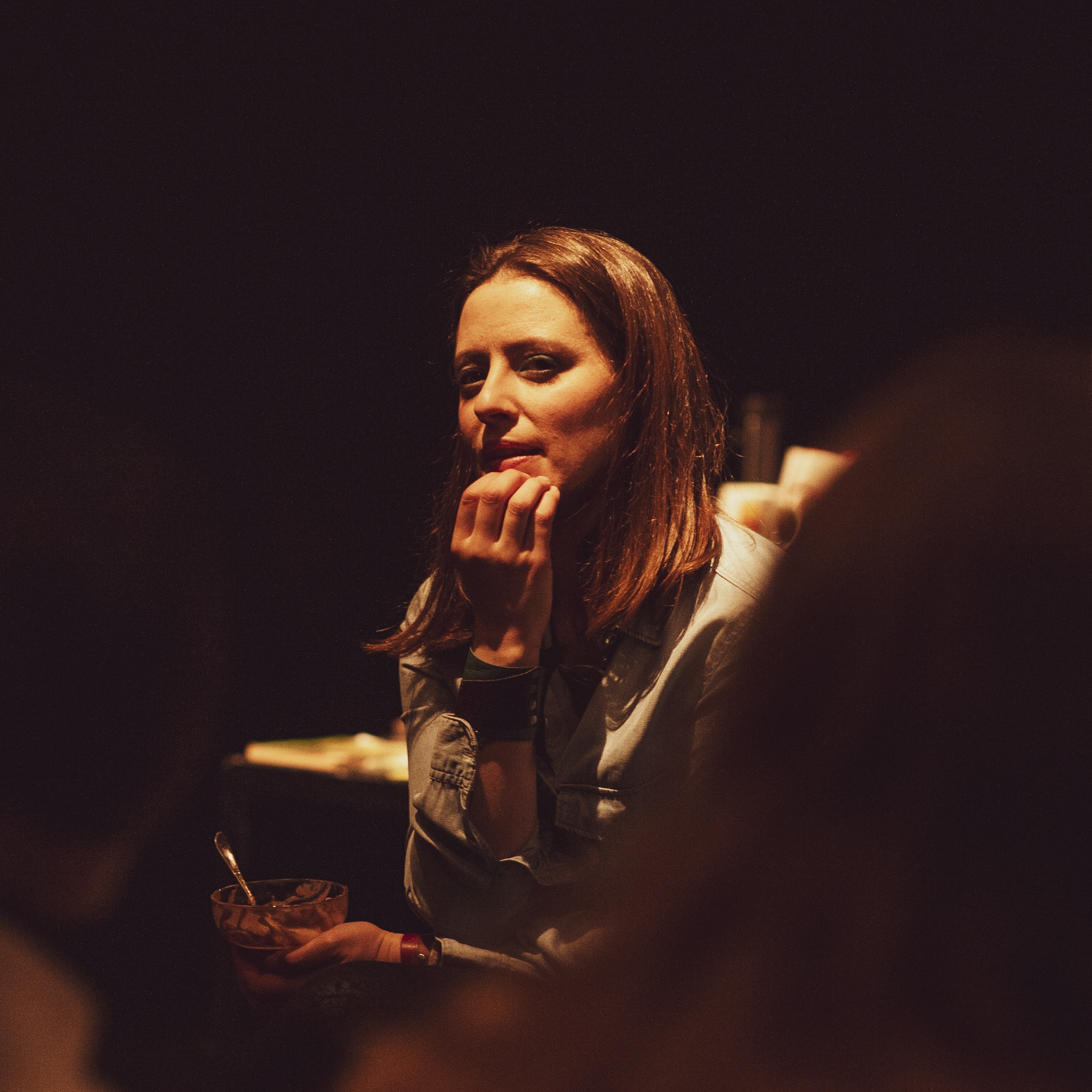
Nata offers a message to politicians, the deciders in our world: “One minute spent thinking—about how and whether to help Ukraine—is one more Ukrainian life lost. I witnessed a fireball 100 meters from my kitchen window; my entire apartment building shook. This Russian rocket exploded mid-air, destroyed by our air defense system. We are fighting the Russian invaders. We are protecting our land. We appreciate the vast amount of support from the United States and Europe and, still, it is not enough. Russia is an imperialist country trying to make Ukraine a ‘colony.’ This should not be happening in the 21st century. So many Ukrainian treasures have been destroyed or looted by the Russians. So many innocent lives have been lost.”
Nata was born in 1985, six years before the dissolution of the Soviet Union. This was a time when school students were required to “pledge allegiance” to the Communist Party. Nata was in first grade when the Soviet Republic of Ukraine became an independent country. This followed decades of Soviet oppression and intentional Russification.
“Although the language of instruction during my school and university studies was Ukrainian,” Nata said, “we spoke Russian at home. We spoke Russian with our friends. We spoke Russian in our daily lives. Since the war began in 2014 (With Russia’s invasion and annexation of Crimea), I have been trying to bring more Ukrainian language into my life, but more recently, I have been intentionally speaking and performing in Ukrainian. It is a little hard, but I’m doing it.”
Nata is a Playback Theater conductor, actor and trainer living in Kyiv, Ukraine. Nata holds a Master’s Degree in Social Work from the Kyiv Polytechnic Institute and has worked professionally in art therapy. She studied the work of German-American social psychologist Kurt Levin (1890-1947), a pioneer of social, organizational and applied psychology. Nata’s academic credentials are complemented by extensive training, certifications, and performance in Playback Theater. She appreciates the inclusiveness of this form of theater and the varied audiences she’s been able to work with: Internally Displaced Persons (IDPs), children, people experiencing visual impairment, members of the deaf community, minority groups such as Romany, LGBTQ folks, etc. Nata has remained in Kyiv with her grandmother since Russia’s invasion on February 24, 2022 where she continues to produce theater for her community.
Nata created the “On Guard” (“Na Varti”) Playback Theater Company in Kyiv just after Russia’s February 24th invasion. This unified two pre-existing Playback Theaters already operating in Kyiv as many actors fled to safety as refugees or took up arms to defend their country.
Playback Theater is a form of improvisational theater in which actors act out stories told by audience members, on the spot. Audiences are intentionally small to create intimacy. Sometimes a formal “theme” is selected for a performance; other times, actors engage audience members to see what themes emerge from their current lives. Actors honor the audience members’ stories, evoking a sense of affirmation, acceptance and, sometimes, even resolution. Playback is an art form that creates space for people to communicate.
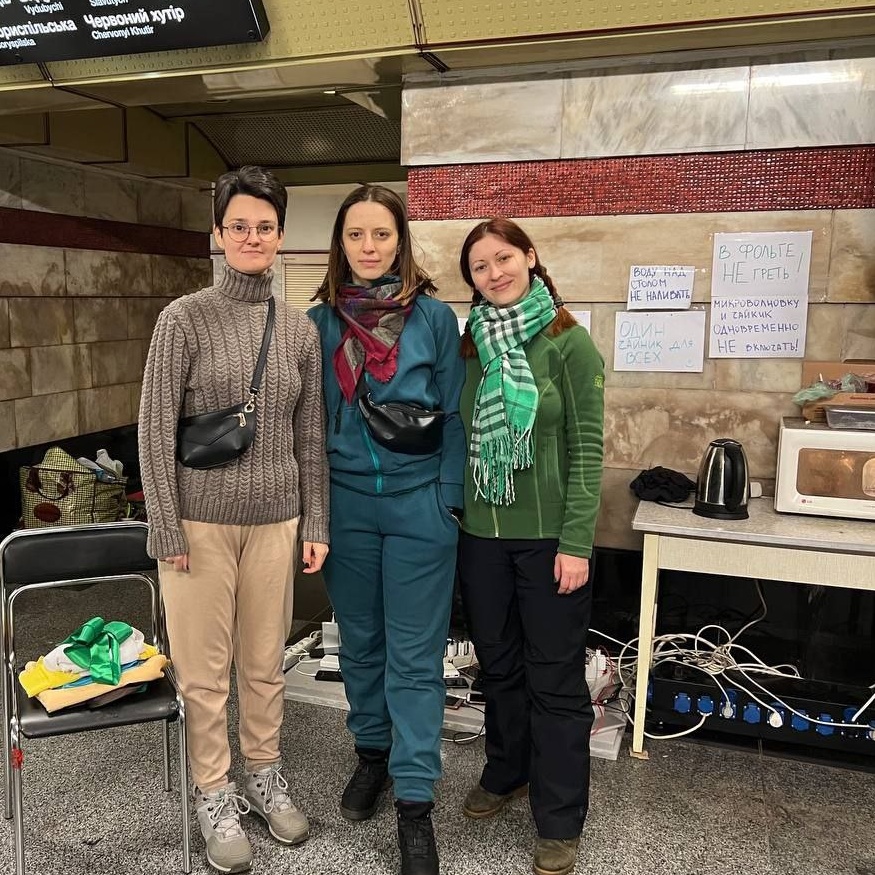
“I slept in the metro the second night of the invasion,” Nata remembered. “It made me ill to be there, all those people and pets, frightened and tired. I returned home. I slept in street clothes for the first couple of months, ready to run (for shelter) at any time. I met with relatives living in the metro. They made tea. We sat on their mattress and talked. It felt so unreal.”
“Our theater troupe resolved to perform Playback for people living in the metro,” Nata said. “Our first performance was in March, a few weeks after the invasion. Audience members shared powerful stories of the places they left behind in search of safety. They spoke of ‘sharp’ (sensitive) things, trusting us to be gentle with their painful experiences. Children said they missed their fathers who were away fighting. A little boy, seemingly adapted to subterranean life in the subway station, referred to us as ‘Humans from the Upper World.’ ”
“So many people left my city (Kyiv) after the invasion,” Nata said. “The streets were empty. Those of us who remained were afraid to go out. We stayed in our homes. Going out to find food was risky and a bit like ‘hunting’—for milk, bread and vegetables. So much of the food is sent to feed our soldiers who are fighting. IDPs began arriving from eastern territories seized by Russia—from Mariupol, Kharkiv, Donetsk, Dnipro, Kherson. I realized we needed to help them find community in this new place. So many of my friends left. A beloved colleague, Mykhailo, was killed. Once I started working with IDPs, I thought, ‘I live here. You live here now. I want to help you adapt as you bring your own stories to this place in which we both now live..’”
“Even though there is a war, people still need art,” Nata said. “People still need connection. We continue to develop our culture during the war: that is what keeps us going. If an audience member telling their story at a performance mentions they are from Mariupol, we ask, ‘Is anyone else here from Mariupol?’ and you see the hands raised. You sense the storyteller’s affirmation, that flicker in their eyes in that moment they realize they are not alone, that others share their experience of displacement. You listen to them sharing stories from their past and connecting them to their present, building a bridge to their future. You see these small groups of audience members gathering and sharing contact information with each other when performances end. They are connecting and supporting each other.”
“One woman from Mariupol told a story of a special Treasure Box in which she kept small personal mementos and souvenirs,” Nata said. “She carried that box when fleeing Russia’s deadly assault on Mariupol. Her apartment key was tucked inside; her apartment building was no more, destroyed by a rocket. Others spoke of hiding in basements, separated ‘by centimeters’ and escaping in cars amid flying bullets targeting civilian evacuees. ‘They’ made it through, but they passed cars that did not.”
Nata observed that stories told by IDPs evolved over time. Initial arrivals spoke of the horrors of the occupation, reliving their traumatic experiences. IDPs’ stories shift, over time following their resettlement to Kyiv—audience participants are calmer, more reflective, more forward-looking as they adjust to daily life in their new ‘home.” This does not mean that they overcame their trauma. They are, however, finding ways to live with loss while adjusting to a somewhat ‘normal life’ and planning for the future, whatever that future may be.
“If we are performing and the air raid warning sirens go off indicating a possible threat, we tell the audience they can choose to go to a shelter,” Nata said. “We continue to perform for those who remain. If we are performing and imminent threat sirens go off, we too, enter shelter with the audience until it is safe to emerge and continue our performance. Doing this work reminded me that people just want to live their lives. They want to work. They want to travel. They want to raise their families.”
“When delivering a Playback Theater training near Odessa (a region in southern Ukraine when the predominant language is Russian), I had the realization that I could not and should not do this in Russian,” Nata said. “ I was working with locals and IDPs—and I decided that, going forward, I would conduct trainings and performances in Ukrainian. Russian is my ‘Mother Tongue’; I still speak it with my family. Russian is also the language of an invasionary force. In my view, Russia does not “own” this language. I am privileged that I can understand when the enemy speaks. I am privileged when some of my theater colleagues in Russia suggest that Ukraine ‘should come back to’ the former U.S.S.R. I understand their messages with clarity. This helps me understand the messages (e.g., propaganda) my colleagues in Russia are hearing from their government. As I switch my language, increasingly, from Russian to Ukrainian, I remind myself that Russia is an occupying terrorist nation.”
Nata and her troupe have performed in the metro, on sidewalks, in basements and, soon, they will return to a professional theater space. They remain committed to their art. These performances were funded, in part, by the NGO Inclusive Theatre Association “ART-Playback” (See instagram.co/art.playback)
“We live in risk. We do art in risk,” Nata said.
“I want Americans to know that Ukraine will fight for victory, until the last foot of the Russian occupiers leaves our land,” Nata said. “This invasion is our ‘common business’ in our 21st century global community. Ukrainians are fighting for their identity, borders, and independence. I want to have the right to my Ukrainian identity.”
Nata dedicates this story to all the brave defenders of Ukraine and, especially, to her dear colleague, Mykhailo, a talented scientist, psychologist and artist killed in the war.
| To Learn More: |
| Na Varti Playback Theater Co. in Kyiv: https://www.facebook.com/PlaybackTheatre.NaVarti NGO established by Nata https://www.facebook.com/art.playback – https://www.facebook.com/nata.vainilovych -Nata’s Facebook Page |
| To Support Nata’s work to bring live theater to the people of Kyiv: |
| Foundation of the Ukrainian School of Playback Theater which support Playback Theater across Ukraine: https://secure.wayforpay.com/payment/usptfoundation Contact Katherine if you wish to support Na Varti directly. |
I invite you to follow my blog at https://presenttime.blog.
 Present Time
“Humans from the Upper World.” This boy’s sentiments are echos from earlier wars and should be science fiction and not reality in 2023.
LikeLike