

Uncle Tomek winked his eye, offered a mischievous grin, and gestured for Aleksandra to follow him. I trailed behind, curiosity piqued and mind prepared to translate my uncle’s Polish to my five-year-old daughter’s English.
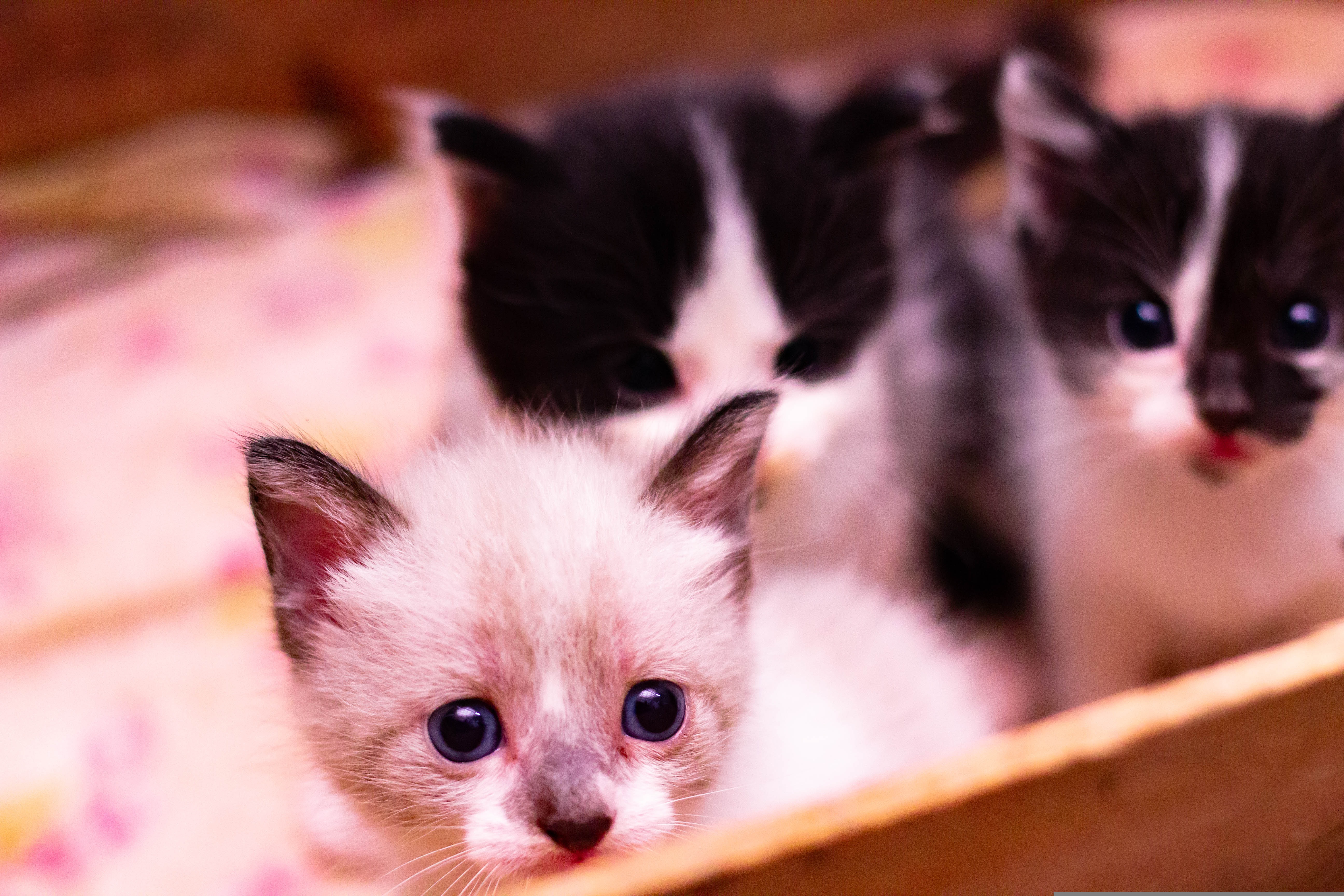
We followed Tomek to the bedroom he shared with my Aunt Genia, my mother’s oldest sister. Tomek knelt down and slid a small, cardboard box out from underneath the bed. What did we see? A brand new momma cat surrounded by mewling kittens. Tomek modeled gentleness, caressing the newly-arrived felines. Aleksandra followed, dipping her little hand into the warm, purring fuzziness. Shared delight and wonder transcended any linguistic barriers.
Tomek loved animals. He worked as a veterinary technician, riding his bicycle or getting lifts from farmers to tend to ailing cows, horses and goats on nearby farms. At home, he favored dogs, small breeds – terriers or pugs – and took pride in training them well. Tomek reveled in giving his LITTLE dogs BIG names like Cesarz (Emperor) and Tyran (Tyrant). He loved cats, too, as evidenced by the box under his bed.
Tomek and Genia built their beautiful, tidy home in Radgoszcz, a small farming village in southeastern Poland during the communist era. Securing cement and rebar amid chronic shortages required tapping into Poland’s then-black market. My uncle designed an advanced heating system. My aunt hand-stenciled walls in traditional Polish nature motifs and sewed lace curtains. I loved visiting them when I was a university student in Krakow. “My” room had a balcony overlooking their fruit trees and garden.
Tomek and Genia also shared a wonderful sense of humor. I loved witnessing their light-hearted banter. They cared deeply for each other. Tomek and Genia were unable to have children. My uncle once told me, “If we’d been able to have children, I’d have hoped to have a daughter like you.” Tomek & Genia taught me what it meant to be a loving aunt and uncle. Growing up in the U.S., I had no aunts, uncles, cousins or grandparents on the continent. Tomek and Genia helped fill a void I didn’t know I had.
Tomek would tease me that I talked too much during dinner. “The table is for eating,” he’d say. “We’ll enjoy conversation with tea and cake in the kawiarnia after dinner.” Kawiarnia means “cafe” in Polish – this is what Tomek called their living room.
My aunt and uncle were good people. They worked and tended their garden. They helped their neighbors. Genia packed homemade sandwiches and jars of compote made from plums or strawberries for my journey back to school. Tomek, a man of precision, gathered eggs from their coop, wrapping them in elaborately engineered “constructions” of paper and string designed to withstand my cramped bus and train ride back to Krakow.
Tomek was thirteen years old when Germany invaded Poland on September 1, 1939. Within weeks, Radgoszcz experienced brutal German occupation and pacification. Tomek’s father, Jan, was a politically active farmer before the war, striving to improve standards of living for the community. Jan and Tomek joined the Polish underground as father and son, risking their lives to disrupt German occupation via covert acts of sabotage.
Tomek’s father died at Auschwitz. Jan was arrested in the spring of 1943 and murdered by the Germans within weeks. My uncle never spoke to me about his father and the immense loss he endured when just a teenager.
I am left wondering why, during the 2026 International International Day of Commemoration in Memory of the Victims of the Holocaust, German Diplomat and President of the United Nations General Assembly, Annalena Baerbach, acknowledged the suffering of the Jews, Roma, Sinti, LGBTQ+ and people living with disabilities BUT LEFT OUT POLES. See text: https://www.un.org/pga/80/2026/01/27/pga-remarks-at-holocaust-memorial-observance-2026/
Annalena neglected to mention that Poles were the SECOND LARGEST GROUP OF DEPORTEES TO AUSCHWITZ, after Jews. An estimated 140,000-1500,000 Poles were sent to Auschwitz, with 70,000 dying there. Comparatively speaking, an estimated 21,000 Roma and Sinti and an estimated 15,000 Soviet prisoners died at Auschwitz.
Clarifying this loss of life does not diminish recognition of the enormous loss of Jewish lives, estimated at 1 million, at Auschwitz. Actually, it provides a more accurate picture of the magnitude of German crimes.
I am left to wonder WHY German acknowledgement is lacking. My suspicion? Germans were socialized to believe Poles were untermenschen (subhumans) during WWII. Might it be that they have difficulty shaking this dehumanizing prejudice?
Jan Gondek, my Uncle Tomek’s beloved father, was living a life of meaning. He, too, deserves acknowledgement of his murder at Auschwitz.
Unacknowledged harm reverberates like so many waves of sadness, across generations. Annalena could have done better.
Source: https://www.auschwitz.org/en/history/auschwitz-and-shoah/the-number-of-victims/
I invite you to follow my blog at https://presenttime.blog/

