
A soft rain fell in Krakow on Saturday morning, April 26, 1984 — forty years and one day ago. I was a 21-year-old exchange student studying history at a university in southeastern Poland. I was an “American Capitalist” living behind the Iron Curtain.
I’d been socialized to navigate a communist system where economic hardships and an unjust political system invaded the everyday lives of Poles. I was privileged. I possessed a U.S. Passport emblazoned with a golden eagle. I could leave anytime I wanted. Poles needed permission to travel West. Political involvements were weighed and folks were investigated. Many Poles were denied passports by the government, trapped within their borders.
Shortages of basic consumer goods like toilet paper, razors and batteries prevailed. Like Pavlov’s dog, I’d jump into a line outside a shop and, only after securing my place, ask, “What is in the shop?” A robust queue indicated fleeting presence of highly coveted items. There might be offerings of meat or, perhaps even chocolate, something normally only available via our monthly ration cards. I remember standing in lines for kielbasa with just a few strands hanging on hooks when the stressed and often grumpy clerks announced “Juz, nie ma” — the equivalent of “All out.” I’d leave the store empty-handed.
I also learned to surreptitiously collect and hide Solidarity’s pro-democracy flyers and newsletters. I sensed they’d be of historical significance when or if communism fell. I’d find them in our shared kitchen in the dorm. I’d slip them into my pocket and tuck them away in the suitcase stored under my bed. I never shared my “collection” with anyone, including my roommate.
Poland’s communist regime, pressed into Soviet lockstep under the weight of orders from Moscow, squelched civil liberties that we as Americans (used to?) take for granted such as free speech and freedom of assembly. The Pro-democracy Solidarity movement was forced underground. If caught with the contraband, I might be deported. My Polish classmates, if caught, might be arrested or forfeit highly-coveted places at the university. The stakes were much higher for them.
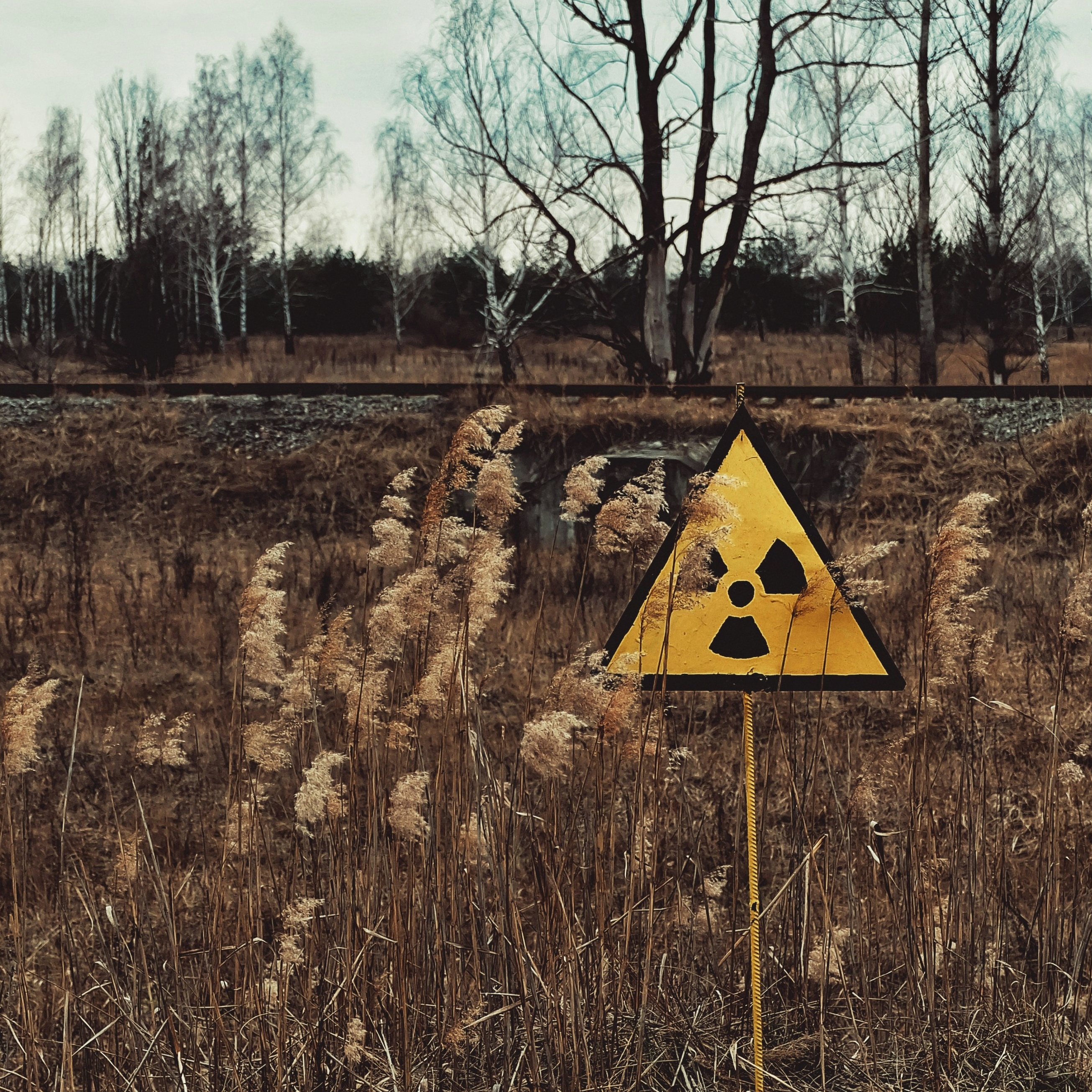
I did not know that at approximately 1:23 a.m. local time, the world’s worst nuclear disaster was unfolding. Five hundred miles northeast, about the distance from Burlington, Vermont to Washington, D.C., a Soviet-built power plant in Ukraine experienced a devastating accident. Reactor #4 at the Chernobyl Nuclear Power Plant sustained a catastrophic meltdown, with an explosion and fire releasing radioactive steam from its core. A massive cloud of Iodine-131 and Cesium-137 floated overhead, directed and dispersed on the whim of the wind.
Soviet authorities remained silent.
Two days passed.
The Soviets still remained silent.
Science does not lie.
Evidence surfaced.
On the wind.
In the air.
Amid the raindrops.
Eight hundred miles from Chernobyl, radiation sensors at Sweden’s Forsmark Nuclear Power Plant detected elevated readings two days later, on April 28, 1986. That same day, a monitoring station in Mikolajki, Poland, six hundred miles from Chernobyl, noted radiation levels were 550,000 times higher than the day before.
Sweden was free to sound the alarm and they did, LOUDLY. Poland, as a Soviet satellite nation, could only offer a muted response as radioactive particulate landed on forests, farms, water sources and urban areas.
The Soviets could no longer hide the accident. On April 29th, three days after the catastrophe, the Kremlin made an announcement. They said that there had been an accident, two individuals were killed, and the situation was “under control.” In reality, firefighters, many of whom would die of radiation poisoning, were trying to quell the flames and cap the devastated reactor to prevent further seepage of radioactive material. There would be far more deaths, including elevated cancer occurrences that continue to this day.
Word spread quickly in the dorm that there’d been some sort of nuclear accident near Kiev (today, Kyiv). I remember the uncertainty, the fear, and the anger I felt. We strained our ears to try to hear Radio Free Europe. Moscow intentionally scrambled the broadcast. Bits and pieces of audio registered as “major nuclear accident” and “stay inside until radioactive cloud disperses.” Ironically, Radio Moscow, a propagandistic English-language radio station, registered crystal clear, reporting on a dance competition held over the weekend near Kiev, a mere eighty miles away from the plant.
The air felt heavy. The idea of going outside felt scary. I imagined tiny radioactive particles seeping into my lungs. Forty years and one day later, I still wonder about the impact. At least, I don’t glow in the dark.
I invite you to follow my blog at https://presenttime.blog
 Present Time
The 1980s, with the end of Communism, seems so far away. The Chernobyl accident seems quant given the current risk of a nuclear World War 3. Who’d of thought that Europe and the US would engage in a forever war with Russia these past 10 years; and Russia would bomb Chernobyl this year. Not folding Russia into NATO 30 years ago seems like a terrible lost opportunity.
LikeLike